
VIP Stocks Cutting The Queue

Few experiences unite humanity quite like standing outside somewhere you’re not yet allowed to be. Like the line for a night club. Getting colder and more sober, only to watch VIPs walk straight in. Drinking culture may be losing its grip on the younger generation, but the VIP enamour isn’t going anywhere.

So, who is jumping the queue?
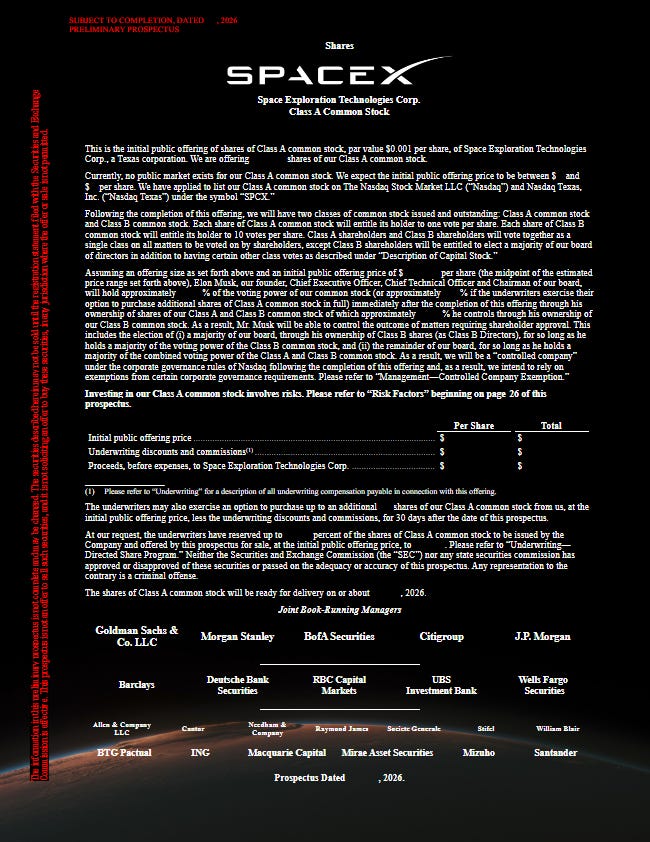
SpaceX recently filed with the SEC at a target valuation of approximately $1.75 trillion, which would make it the sixth largest company in America on day one of trading. OpenAI crossed an $850 billion valuation in its most recent funding round and is expected to list in late 2026 or early 2027. Anthropic, the company behind Claude, hit an annual revenue run rate of $30 billion in April 2026, up over 200% in a single year, and is expected to follow suit.
Together these three companies represent somewhere north of $3 trillion in combined valuation, the most concentrated IPO pipeline in history and every single one of them an AI play. Apollo’s chief economist Torsten Slok has warned that if all three list this year, the top 10 holdings in the S&P 500 could approach 50% of the entire index, effectively turning the world’s most important retirement index into a highly concentrated AI thematic fund. The diversification that made passive investing so compelling in the first place shrinks, and underlying investors may not even notice until something goes very wrong.
Why was there ever a queue?
When a company first goes public, the market needs time to work out what it is worth via price discovery. Price movements can be sharp post-listing, as the business delivers (or not) against its marketed projections and a stable cap table is established.
There is also the question of liquidity. New listings typically have a small float, only a fraction of the total shares available for public trading because insiders are locked up. Forcing index funds to buy a thinly traded stock creates price pressure that can be detached from a company’s underlying value.

The waiting period gives the market time to calm down and liquidity to build naturally before the weight of passive buying takes over.
Passive plebs
Passive investing once offered a free ride on the price discovery work of active managers – low cost, low effort, market returns. But as passive money has come to dominate, the index is less a reflection of the market as it is the market. And now the rules are being re-written in favour of insiders and early investors and at the expense of broader market participants.
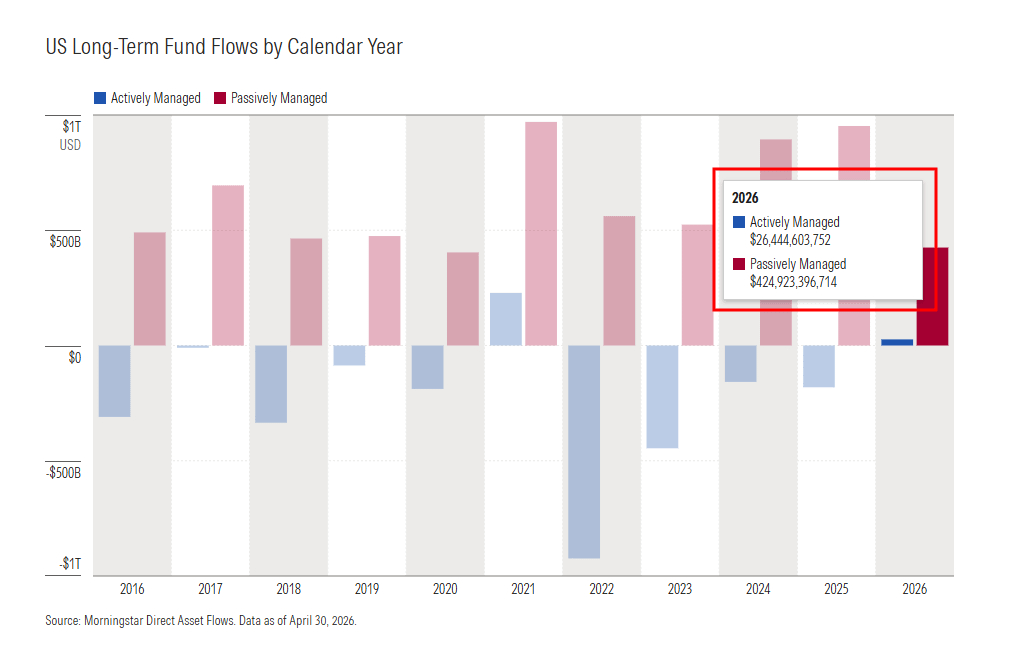
When SpaceX enters the Nasdaq-100 after 15 days of trading, every passive fund tracking that index will be a buyer of that stock and, importantly, price agnostic. That means hundreds of billions of dollars will be chasing a thin float of a stock after just three weeks of trading.
Supply and demand dynamics tell us the price will go up, a lot, and fast. Which is wonderful if you are an early investor sitting on a large, unrealised gain. It is less wonderful if you are a retiree whose superannuation just bought a stock at the top and provided the exit liquidity for insiders.
George Noble, a veteran Fidelity fund manager with decades of experience on Wall Street, has described the fast entry rule change as a structural manipulation of a major index.
Follow the money
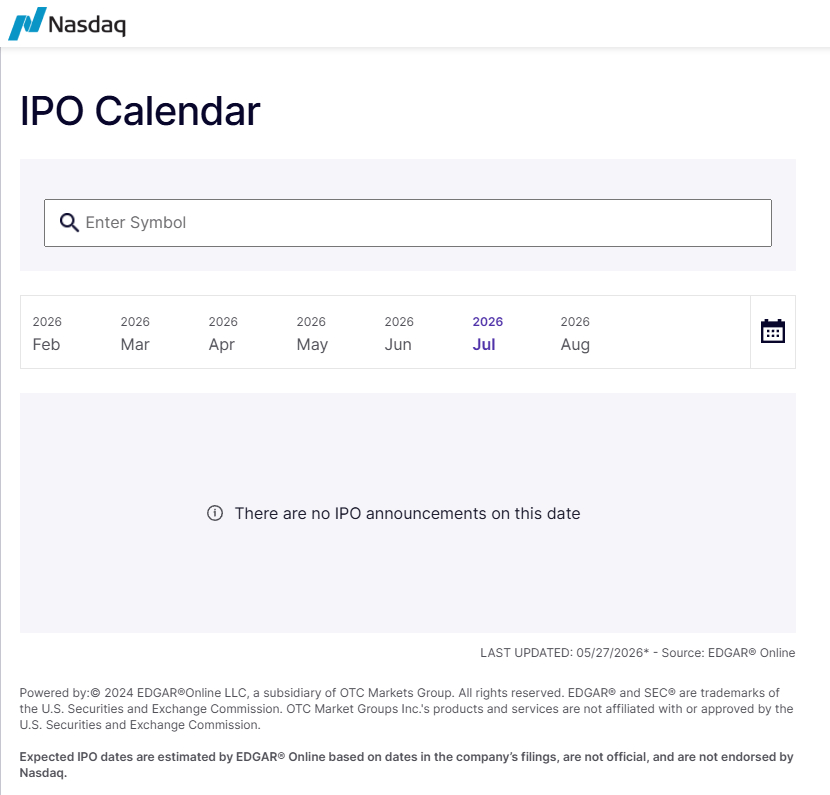
Nasdaq reportedly changed its rules in part because SpaceX made fast index inclusion a condition of listing with them rather than the NYSE. The commercial incentive to win that listing is enormous, listing fees, trading volumes, prestige. The incentive to protect minority shareholders is considerably smaller.
The rules are being rewritten to benefit IPO issuers and early-stage insiders, and passive capital may be the vehicle driving those gains.
Whether that’s reason enough to step aside is another question.
From the desk of IGB